


Concrete is a durable material, however, and like the strongest structures made with it, concrete can lose its strength over time. Structures such as parking garages, bridges, foundations, and industrial floors are constantly under a barrage of exposure to weather, moisture, and heavy loads. Poor concrete maintenance can deteriorate structures and reduce their life.
If you can identify the culprits early, the repairs can commence without significant harm setting in.
Why Concrete Begins to Fail?
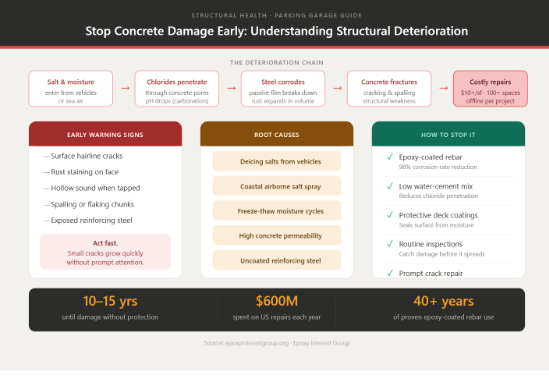
While it is true that concrete ages, certain conditions speed up the damage. One of the main threats is water because it can bring unsuitable chemicals into the material. Corrosion starts once water seeps into the reinforcing steel − leading to cracking and spalling at the surface.
Other common causes for concrete damage include:
- Repeated freeze-thaw cycles
- Salt exposure
- Heavy traffic loads
- Poor drainage
- Low-quality construction materials
Each one of these factors can slowly deplete structural integrity.
Identifying Serious Warning Signs
Cracks may take place in various parts of the building and not every crack is dangerous, but there are some signs that require immediate attention.
Look for:
Deep Cracks
As a broad guideline, expanding cracks or large cracks could suggest structural motion.
Flaking Surfaces
Concrete that starts to flake or chip is often indicative of internal damage.
Exposed Reinforcement
Visibility of the steel bar implies acute wear and potential corrosion.
In cases where any of these problems arise, dealing with advanced concrete deterioration causes becomes necessary to avert consequent structural problems.
Ways to Slow Down the Damage
Preservative maintenance outperforms all: a permanent investment into every concrete structure.
Simple actions consist of:
- Repair cracks quickly
- Apply waterproof sealers
- Improve site drainage
- Schedule regular inspections
- Remove standing water whenever possible
By implementing these maintenance tips, you can greatly reduce your risk of concrete deterioration and extend the life of your structure.
Why Early Repairs Save Money?
Repairs of major structural failures are costlier and difficult; however, minor defects can be easy to repair. The longer it is left, the bigger the restoration project and the more expensive repairs become.
Owners of property that address the underlying causes of advanced concrete deterioration before significant damage occurs are much more likely to maintain structural integrity while avoiding surprise expenses.
Final Thoughts
No physical structure survives the mercy of time; except for a little when it is appropriately looked after. While concrete may seem incredibly durable, proactive measures can exacerbate deterioration over time or place undue stress on the installed structure. Routine inspections, repairs as needed, and moisture protection are all essential in reducing deterioration of any concrete structure.
Being able to identify warning signs and address advanced causes of concrete deterioration as soon as possible keeps buildings, infrastructure, the value of property over time healthy − while also keeping repair costs manageable.