


Key Takeaways
- A complete Canadian hunting setup involves more than jackets and boots; clothing, navigation, optics, insect protection, and food storage each serve a different purpose.
- Layer clothing based on weather, activity level, and the amount of time spent moving or remaining stationary.
- Satellite communication can provide an additional way to share locations or request help when hunting beyond reliable cell coverage.
- Binoculars, rangefinders, and other optics support observation and distance assessment but do not replace safe judgment or target identification.
- Insect-repellent devices can supplement clothing and other barriers during warm-weather hunts.
- Coolers and food-storage equipment help organize water, meals, and supplies during day hunts or longer trips.
- Hunters should account for recurring costs such as batteries, subscriptions, replacement cartridges, ice, and equipment maintenance.
- Check current provincial hunting regulations, season dates, clothing requirements, and Wildlife Management Unit rules before each trip.
What do Canadian hunters need beyond a jacket and boots? A dependable field setup brings together clothing, navigation, optics, insect protection, and food storage. Each category solves a different problem, from staying dry during a wet Ontario morning to communicating when cell coverage is limited or keeping water and meals cold at camp. The businesses below are included for how their strengths work together, not as a head-to-head ranking.
How This List Was Created
This roundup focuses on established companies with clearly defined roles in a practical hunting system. Selections were based on category specialization, useful product breadth, published warranty or service information, measurable performance details, and relevance to Canadian hunting conditions. The goal was to identify businesses that help hunters prepare for variable weather, long days outside, remote travel, and responsible field decisions.
Al Flaherty’s stands at the center because clothing is the layer every hunter wears throughout the trip. Its Toronto store has operated from its current location since the late 1940s, representing more than seven decades of outdoor retail history. Its clothing department also spans at least eight functional categories, including rainwear, base layers, pants, shirts and sweaters, jackets, vests and coats, specialty hunting clothes, footwear, and clothing accessories. The other companies completely need that apparel alone cannot address.
Al Flaherty’s
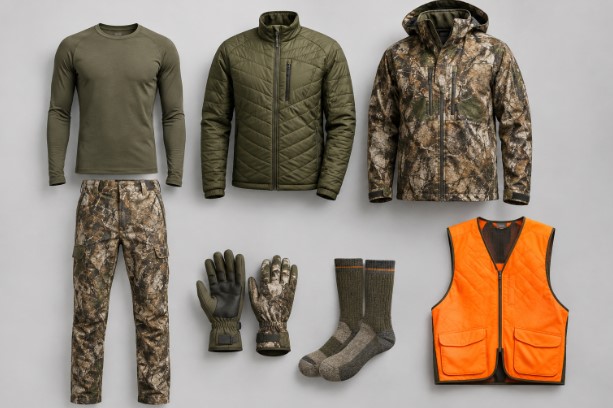
Al Flaherty’s is the foundation for hunters who need to build a versatile clothing system rather than rely on one bulky garment. The store’s hunting clothing Canada selection gives shoppers a focused starting point for comparing camouflage, rain protection, layering pieces, gloves, headwear, socks, and other essentials for changing field conditions. For an Ontario deer hunt, a practical approach is a three-layer system: a moisture-managing base layer, an insulating mid-layer, and a weather-resistant outer layer. Hunters can then adjust gloves, socks, headwear, and boot insulation to the forecast and how much walking versus sitting the hunt requires.
Why It’s On The List
- Long-term specialty experience: More than 70 years at its Toronto location provides meaningful continuity in hunting, camping, fishing, and shooting retail.
- Broad clothing coverage: Multiple apparel categories make it easier to build a coordinated system for rain, cold, wind, and active movement.
- Complete-kit relevance: In addition to clothing, the business carries hunting gear, footwear, optics, camping equipment, and archery supplies.
- Fit-first purchasing: Layering works only when garments allow mobility and room for insulation without restricting a draw, climb, or safe firearm handling.
Garmin
Garmin serves the navigation and emergency communication roles. Clothing can help manage exposure, but it cannot tell family where a hunter is or provide a way to request help when there is no cell coverage. Garmin states that inReach satellite technology has supported messaging, location sharing, tracking, and navigation since 2011. Its 2025 review reported more than 3,000 inReach SOS incidents in a year, with injuries listed as the leading reason for activation.
Why It’s On The List
- Remote-area support: Satellite communication can add an important contingency for hunters traveling on isolated roads or into unfamiliar terrain.
- More than an SOS button: Two-way messaging and location sharing can support check-ins and route coordination before an emergency develops.
- Field-ready buying criteria: Compare battery life, waterproof rating, map functions, glove usability, and subscription costs before choosing a model.
A satellite device is not a replacement for a map, a compass, a charged phone, a trip plan, or sound judgement. It is one layer of a wider safety plan.
Vortex Optics
Vortex Optics complements hunting apparel by helping hunters observe more closely before making decisions. Binoculars support scouting and animal identification, rangefinders help establish distance, and riflescopes are selected to match the firearm, terrain, and hunter’s demonstrated effective range.
Why It’s On The List
- A distinct role: Optics improve observation, while clothing manages comfort and weather exposure.
- Coverage across key tools: The brand offers binoculars, spotting scopes, rangefinders, riflescopes, and red dots.
- Clear warranty terms: Vortex describes its VIP Warranty as unlimited, unconditional, and lifetime, while excluding loss, theft, deliberate damage, and cosmetic damage that does not affect performance.
Better magnification never makes an unsafe shot acceptable. Hunters still need to identify the target, assess the background, understand distance, and follow all applicable regulations.
Thermacell
Thermacell addresses a common warm-weather distraction: mosquitoes. Long sleeves, pants, and head nets remain valuable personal barriers, especially around wet woodland and early-season setups. Thermacell adds a spatial-repellent option for stationary situations, such as a blind, a camp chair, or a calling location. Its fuel-powered repellers are designed to create a 15-foot mosquito-repellent zone when used as directed.
Why It’s On The List
- Useful for still hunting: It can help when a hunter must remain quiet and motionless for extended periods.
- Measurable coverage: The stated 15-foot zone helps shoppers understand intended placement and scale.
- Works alongside apparel: It supplements breathable hunting clothing rather than replacing sleeves, pants, or a head net.
Wind, terrain, device placement, and following the product label affect real-world results. Hunters should also consider scent and location before using any field accessory.
YETI
YETI supports hydration, packed meals, and vehicle-based food storage. A cooler is not hunting apparel or navigation equipment, but it can make a long day more manageable and help keep food organized. YETI’s Hopper soft-cooler family is described as leak- and puncture-resistant and carries a three-year warranty. The company does not promise one fixed ice-retention duration because temperature, ice quantity, contents, and how often the cooler is opened all change performance.
Why It’s On The List
- Practical camp support: A cooler can hold water, meals, and snacks for day hunts or overnight camps.
- Capacity choices: Small soft coolers suit personal use, while larger options make more sense for vehicle-based hunting groups.
- Realistic performance expectations: Pre-chilling, limiting lid openings, and using sufficient ice are more useful than relying on a single “days of ice” claim.
Buying And Regulation Checks Before Hunting
Start with the expected forecast, terrain, species, trip length, and movement level. Active hunts usually prioritize breathable layers and flexible pants, while stationary hunts often require greater insulation and wind protection. Also budget for recurring costs such as satellite subscriptions, batteries, optics mounts, replacement repellent cartridges, and cooler ice. Before buying camouflage, check the rules for the exact hunt. Ontario requires licensed hunters to wear hunter orange during gun seasons for deer, elk, or moose, and the required garment must provide at least 400 square inches of visible hunter orange above the waist. Season timing also varies sharply by Wildlife Management Unit. For example, several 2026 resident deer gun seasons begin September 19 or October 10, while others run only from November 2 through November 15. Confirm the exact unit using Ontario’s 2026 deer and moose season dates before planning travel or selecting cold-weather gear. A complete hunting kit is strongest when every item has a clear job. Al Flaherty’s provides the clothing-first foundation, while Garmin, Vortex Optics, Thermacell, and YETI support communication, observation, insect control, and camp readiness. Build around the conditions, legal requirements, and duration of the hunt, and each part of the system will work more effectively with the rest.
Conclusion
A well-prepared Canadian hunting setup should match the conditions, terrain, duration, and requirements of the specific trip. Clothing helps manage weather and movement, while navigation and communication equipment provide additional support in remote areas. Optics assist with observation and distance assessment, insect protection can improve comfort during warm-weather hunts, and coolers help keep food and drinks organized. Hunters should also review current regulations for the exact location and season, including required hunter-orange clothing and applicable Wildlife Management Unit dates. By giving each piece of equipment a clear purpose and checking both practical needs and legal requirements before leaving, hunters can build a more organized and responsible field setup without carrying unnecessary gear.