
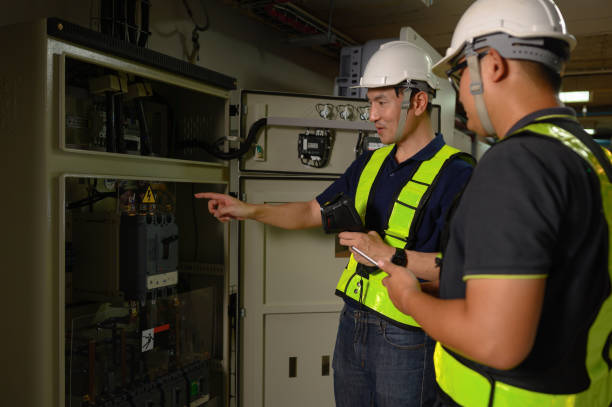


Introduction
Commercial properties have electrical demands that go far beyond what residential systems experience. The combination of higher loads, continuous operation, complex systems, and the direct connection between electrical reliability and business performance makes professional electrical services commercial properties a specialized and critically important field. Getting the right electrical partner for your commercial property is one of the most important decisions a business or property owner can make.
Understanding Commercial Electrical Requirements
Commercial electrical systems differ from residential in fundamental ways. Most commercial buildings use three-phase power — a more efficient distribution of electrical energy that supports larger loads and reduces wiring costs compared to single-phase residential systems. Three-phase systems power large HVAC equipment, elevators, industrial machinery, and other heavy-load applications that residential systems simply cannot support.
Commercial buildings are also subject to more stringent code requirements. The NEC has specific provisions for commercial occupancies that go beyond residential requirements, covering areas like emergency lighting, exit sign systems, fire alarm wiring, hazardous location wiring, and the separation of lighting and power circuits. Compliance with these requirements isn’t optional — it’s enforced through inspections and has direct implications for insurance and liability.
Power Distribution for Commercial Buildings
The main service entrance and electrical distribution system in a commercial building must be sized and configured to support current loads plus reasonable growth projections. Under-sizing the electrical infrastructure is a common mistake that creates operational problems and expensive upgrades later. Over-sizing, while less dangerous, represents unnecessary upfront cost.
Commercial panel design involves not just total capacity but also circuit organization. Grouping loads logically — lighting on separate circuits from receptacle power, different tenant spaces on separately metered services, critical systems on protected circuits — makes the system more manageable and improves both reliability and operational flexibility.
Sub-metering is increasingly important for commercial properties. Monitoring energy consumption at a granular level identifies waste, supports tenant billing in multi-tenant buildings, and provides the data needed for energy efficiency improvements. Professional electrical contractors design and install sub-metering systems that integrate with building management systems.
Lighting for Commercial Spaces
Commercial lighting serves multiple functions simultaneously — task lighting for work performance, ambient lighting for comfort and atmosphere, safety lighting for navigation and emergency egress, and accent lighting for aesthetics and brand expression. Designing and installing commercial lighting systems that serve all of these functions effectively requires both electrical expertise and lighting design knowledge.
LED technology has transformed commercial lighting. The energy savings compared to older fluorescent and HID systems are substantial — typically 50 to 70 percent — and modern LED systems offer better light quality, longer lifespans, and far greater flexibility in color temperature and control options. An LED lighting upgrade in a commercial building often pays for itself within two to four years through energy savings alone.
Data and Technology Infrastructure Power
Modern commercial buildings depend on extensive data and technology infrastructure — server rooms, network equipment, security systems, AV systems, and communication systems all require reliable, protected power. These systems are sensitive to power quality issues including voltage fluctuations, harmonics, and outages.
Uninterruptible power supply (UPS) systems, dedicated circuits with surge protection, and proper grounding are all elements of a power infrastructure that supports technology systems effectively. An electrical contractor with experience in technology-intensive commercial environments designs these systems with the specific needs of the equipment in mind.
Conclusion
Commercial properties deserve electrical contractors who understand their complexity and bring the expertise to handle it effectively. Southaven Electrical Service delivers the professional electrical services commercial properties need throughout the Southaven MS and Mississippi area. Contact us today to discuss your commercial electrical requirements.