


Key Takeaways
- Accurate weather data enhances crop management and yield predictions.
- Technological advancements like AI and IoT are transforming weather forecasting in agriculture.
- Real-time weather monitoring helps mitigate risks associated with extreme weather events.
In today’s rapidly evolving agricultural landscape, access to precise weather data is transforming the way farmers cultivate and protect their crops. As global climate patterns become increasingly unpredictable, staying informed about atmospheric changes has never been more crucial. The use of technologies such as a lift station alarm monitoring system and real-time data collection enables growers to minimize risks and seize opportunities for improved yields and efficiency.
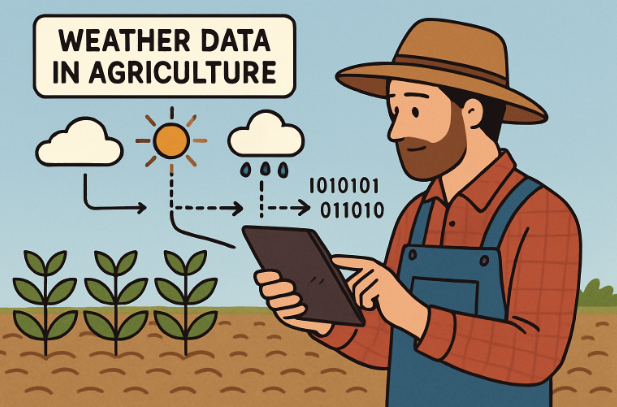
Farmers are now empowered to make data-driven decisions across planting, irrigation, and pest management. These advancements not only optimize resource allocation but also enable more sustainable, resilient farming operations. Weather data, when paired with digital tools, supports smarter choices, especially as the world faces heightened challenges due to climate change.
Embracing data-led agriculture also helps prepare for both routine and extreme weather events, minimizing crop losses and ensuring the food supply remains stable. With continued innovation, these technologies are becoming more accessible to more communities, democratizing the benefits of weather-based decision-making across the agricultural sector.
By leveraging modern meteorological data, agricultural businesses are finding new ways to maintain productivity and efficiency amid changing weather conditions.
Enhancing Crop Management with Precise Weather Data
Access to localized, timely weather information enables farmers to plan and respond proactively. For example, understanding rainfall, humidity, and temperature trends helps growers select optimal planting windows and irrigation schedules. This responsiveness is essential for maximizing yields and minimizing waste caused by adverse weather. Accurate weather data also helps prevent crop diseases and pest infestations by forecasting conditions that trigger outbreaks, giving farmers enough time to apply treatments or protective measures.
AI and IoT: Transforming Weather Forecasting in Agriculture
The adoption of Artificial Intelligence (AI) and the Internet of Things (IoT) has radically improved weather prediction in agriculture. IoT devices in fields collect real-time data on soil moisture, air temperature, and barometric pressure. AI-powered platforms analyze this data alongside global climate patterns, generating highly localized, actionable weather forecasts. Such integration allows farmers to make smarter daily decisions while keeping long-term sustainability in perspective. In addition, these innovations are reducing operational costs and boosting profitability across the industry.
Real-Time Monitoring and Risk Mitigation
With the increasing unpredictability of the climate, the need for real-time, site-specific monitoring is vital. Modern sensor networks can alert farmers to evolving hazards, such as impending storms, drought, or frost, well in advance. Early warnings protect investments by enabling measures like deploying frost blankets, rescheduling irrigation, or adjusting fertilizer applications. Quick, data-backed decisions help maintain output and quality, even in adverse conditions. According to the Food and Agriculture Organization (FAO), such proactive approaches are critical to achieving resilience in global food systems.
Case Study: AI-Based Monsoon Prediction in India
In 2025, India’s agricultural sector benefited greatly from new AI models that successfully predicted a delayed monsoon onset in the northeast region. This information allowed millions of farmers to revise their planting schedules, prepare for limited rainfall, and adjust irrigation strategies. As a result, yield losses that would normally occur during such a weather anomaly were minimized, demonstrating the value of combining AI analysis with traditional knowledge to maximize benefit.
Blockchain Technology: Improving Weather Data Sharing
Sharing accurate, up-to-date weather data across agricultural communities has always been challenging due to concerns about data integrity. Blockchain technology now addresses this by enabling the exchange of verified meteorological information in a transparent, decentralized manner. Farmers, researchers, and agribusinesses can safely share localized weather insights, improving regional forecasts and supporting collaborative decision-making.
Integrating Weather Data with Digital Agriculture Platforms
Digital agriculture platforms are making it easier for farmers to navigate the complexities of modern crop management. These platforms consolidate weather data with farm management features like yield mapping, GPS-driven operations, and precision inputs. As a result, every management action from fertilizer application to harvest logistics is informed by the latest meteorological data, leading to better resource use and reduced environmental impact.
Challenges and Future Directions
Despite these advances, several barriers remain. Inconsistent network coverage and limited access to reliable devices restrict some communities from fully utilizing available technologies. Ensuring data accuracy and building trust in new solutions are ongoing tasks. Educating farmers and making interfaces more intuitive will be essential as technology adoption spreads. Looking forward, widespread collaboration among tech companies, governments, and growers will further accelerate progress and broaden the impact of data-driven agriculture.
Final Thoughts
The integration of precise weather data is vital for elevating modern agriculture, delivering meaningful improvements in productivity, sustainability, and resilience. By embracing these technological innovations, farmers can better manage risks and adapt to a changing climate, ensuring a more secure future for global food production.